


Tallow Myths Debunked: What Science Says
Tallow Myths Debunked: What Science Says
By Bonditallow Editorial Team · Updated 2026-08-19
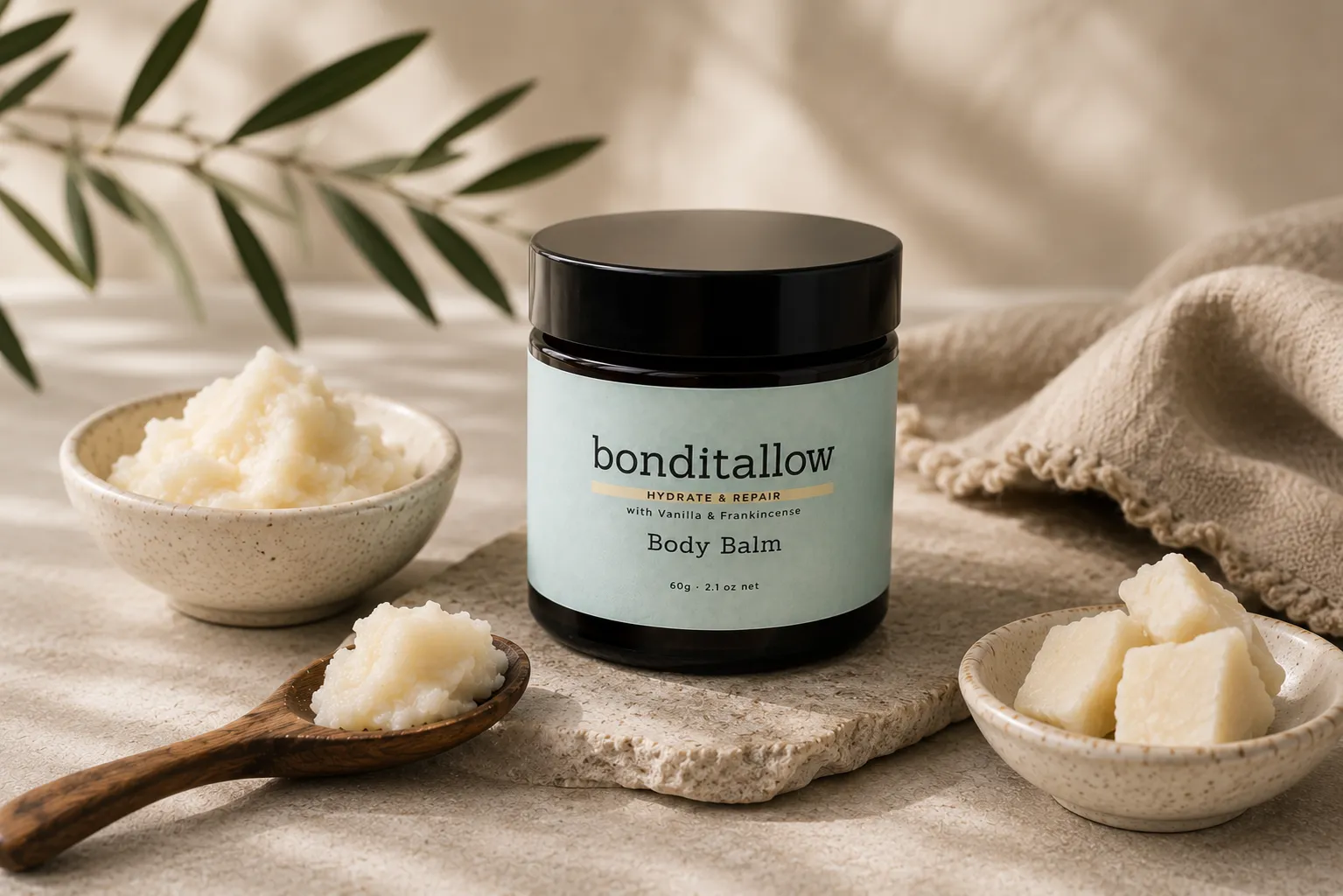
Tallow skincare facts confirm the fat contains skin-compatible lipids that mimic natural sebum, offering deep nourishment for dry or stressed skin. The myth lies in claims of miracle cures; dermatologists note tallow works as a moisturizer, not a treatment. Bonditallow formulates with minimal ingredients, avoiding the 20+ additive lists common in mainstream products.
What's Fact and What's Myth in Tallow Skincare?
Fact separates from fiction fairly quickly once the chemistry gets examined. Grass-fed tallow contains a fat profile that closely resembles the lipids skin naturally produces, which explains why the ingredient absorbs without leaving a heavy film — the same reason a tallow face balm tends to sit better on skin than heavier plant-based creams. Many tallow myths circulating online exaggerate both the promises and the dangers. A grounded look at the evidence matters for shoppers comparing balms.
One persistent claim holds that tallow clogs pores and triggers breakouts. The link between acne and tallow deserves scrutiny, though: dermatological research testing tallow specifically remains limited, despite the ingredient's surge in popularity on social platforms. That research gap means neither dramatic promises nor dramatic warnings carry strong scientific backing yet.
Does tallow smell like meat?
Refined tallow, properly rendered, carries little to no odor. Deodorization concerns stem largely from poorly processed or unrefined batches, not from the fat itself. Careful rendering removes the compounds responsible for that off-putting smell, leaving a clean, neutral base.
Is tallow actually good for dry, stressed skin?
Tallow's fat composition mirrors skin's own oils closely enough to support a compromised barrier. Rich in compatible fats, it nourishes dry, stressed skin without requiring a long list of harsh or unnecessary additives — the kind of simple formula that's made a tallow balm Australia shoppers keep repurchasing, rather than a one-off trend buy. That simplicity, more than any single trending claim, forms the real case for tallow.
Will Tallow Balm Smell Like Beef Fat?
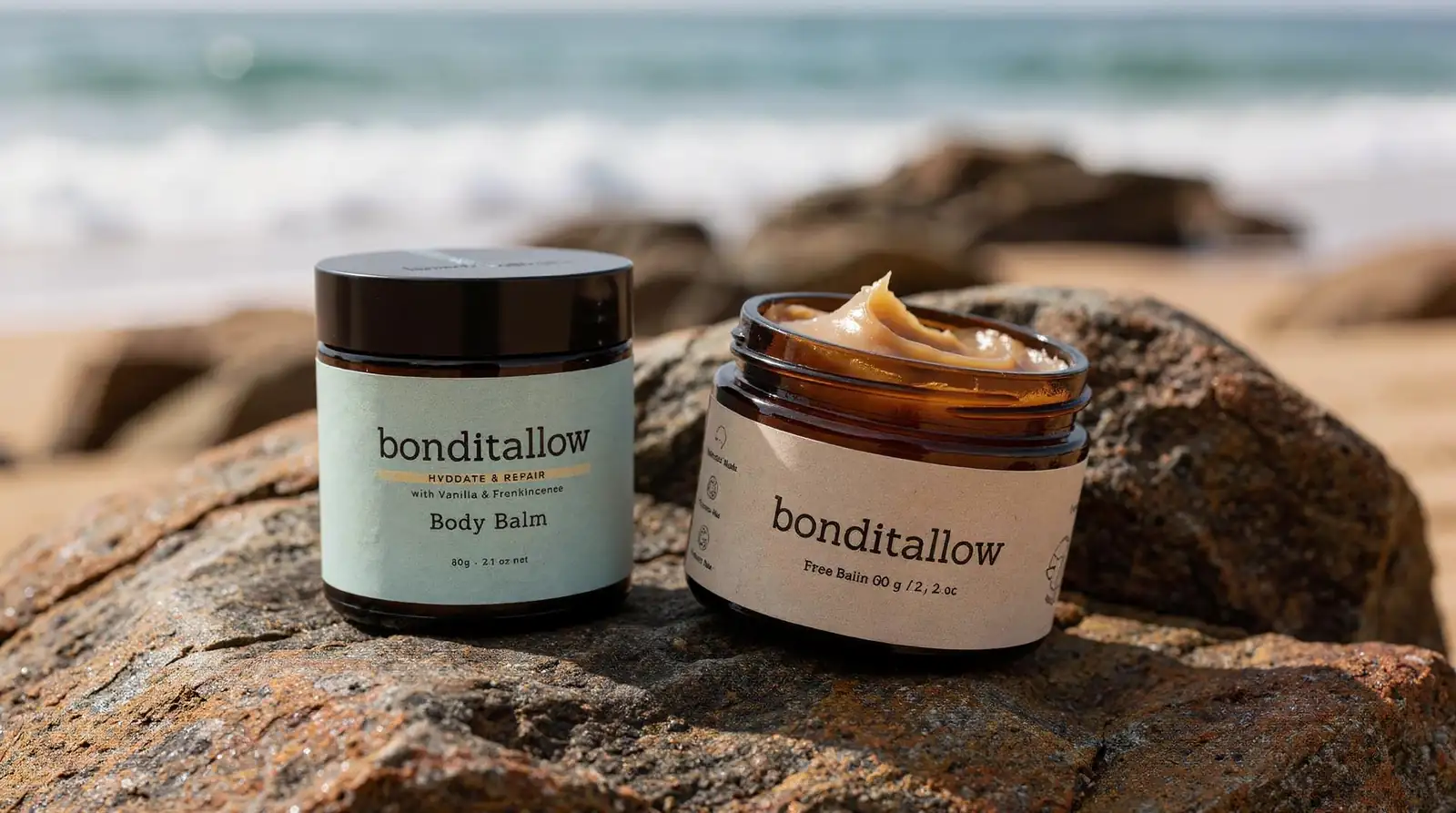
Quality tallow balm carries no meaty odor when formulated correctly. Persistent tallow myths suggest otherwise, but the raw material tells a different story once it's properly rendered and refined.
Bonditallow builds its balms around a simple principle: skin only needs a handful of ingredients to thrive, not a lab's worth of synthetic fragrance to mask anything. Whipped tallow made with quality raw material and thoughtful additions, like plant-derived emollients, produces a lightweight, fast-absorbing moisturizer with no beefy scent whatsoever. Deodorization concerns often stem from cheaply processed fat, not from tallow itself.
Why do some tallow products smell off?
Poor rendering leaves behind proteins and impurities that oxidize and turn rancid over time. Batches produced far from where they're used, or held in storage too long, tend to develop stronger odors.
What separates a clean product from a questionable one:
Sourcing — grass-fed, well-processed fat starts nearly scent-neutral
Local production — Australian-made, small-batch balms reduce transit time and storage age
Formulation — quality additives support absorption without needing synthetic cover-up scents
Bonditallow products are made and owned in Australia, where local small-batch production keeps formulas fresh and consistent — it's the same reason a tallow lip balm made this way stays scent-neutral batch after batch, unlike imported alternatives sitting in transit for weeks. It's a standard Bonditallow applies across the whole tallow Australia range, not just one product. That freshness, paired with minimal ingredient lists, is what keeps the balm smelling clean rather than like the barnyard.
Does Tallow Trigger Acne or Calm Reactive Skin?
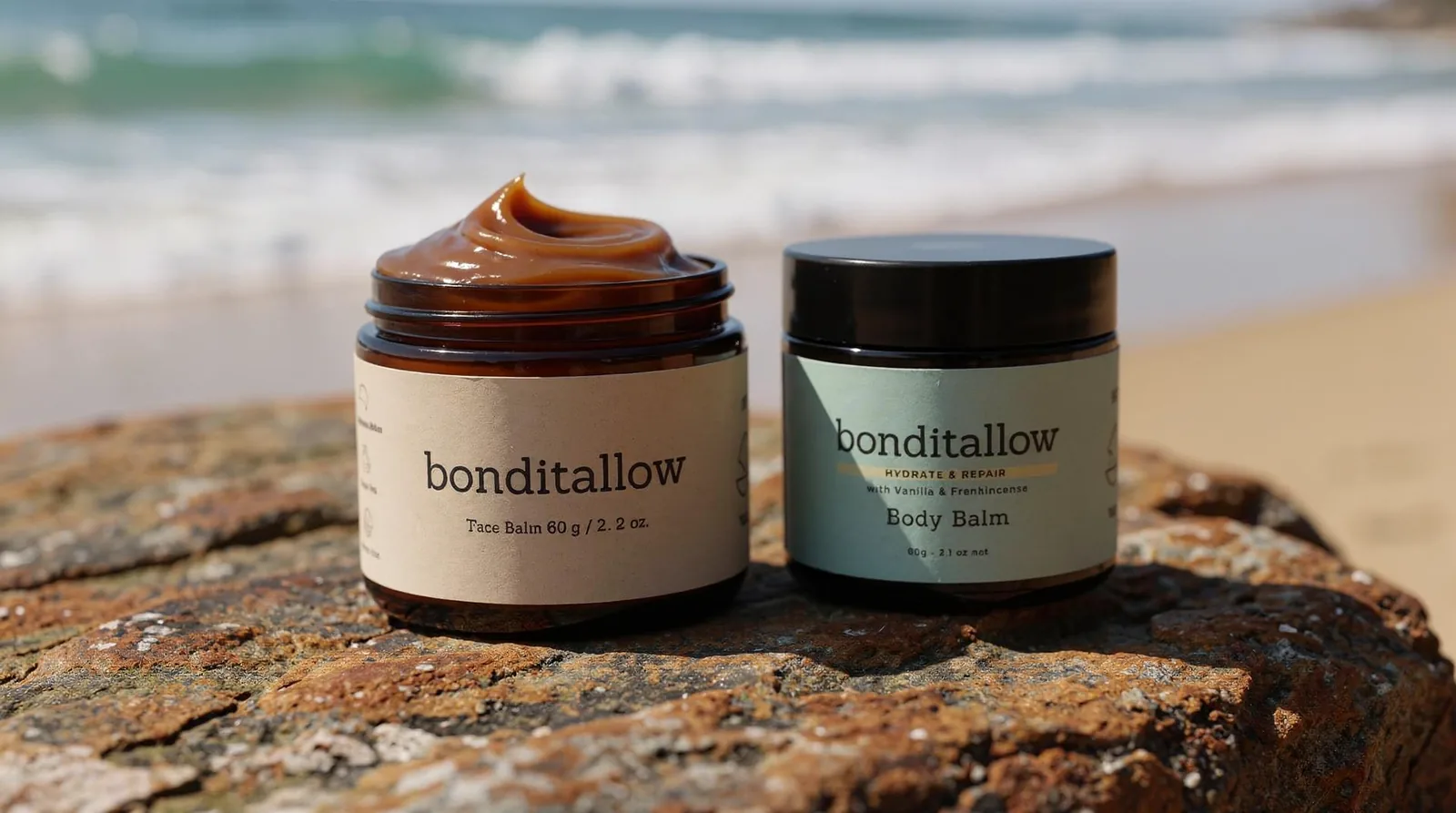
Grass-fed tallow, properly refined, closely resembles human sebum rather than clogging pores. That resemblance explains one of the biggest tallow myths circulating online: the assumption that any animal fat sits heavy on skin and breeds breakouts. Well-processed tallow behaves differently. Its fatty acid profile mirrors what skin already produces, so pores recognize it instead of resisting it.
This compatibility matters most for skin that reacts easily. Rich, fat-based moisture softens dryness and reinforces the skin barrier, the outer layer that keeps irritants out and hydration in. A stronger barrier means fewer flare-ups for redness-prone or sensitized skin types.
Can Tallow Balm Help With Acne-Prone Skin?
Reactive skin often improves rather than worsens with tallow-based care. Founder Bonditallow's own skin, left slow-healing after years on the rugby field, calmed noticeably once conventional moisturizers were swapped for tallow — a result tied directly to barrier support rather than pore-clogging. Compatibility, not heaviness, defines the acne and tallow conversation.
Does Refining Change How Skin Responds?
Refinement level changes everything. Crude, unrefined fat behaves unpredictably; properly rendered tallow does not.
Closely matches natural sebum composition
Lowers pore-clogging likelihood versus rougher fats
Softens dryness while reinforcing barrier function
Suits daily use on sensitive or irritated skin
Quality processing, not the ingredient itself, separates breakout risk from genuine skin calm.
Two More Myths Worth Addressing
Myth: Tallow Skincare Isn't Suitable for Oily Skin
Oily skin gets lumped in with "avoid all animal fats" advice more often than the evidence supports. Oiliness usually comes from overactive sebum production, not from skin lacking compatible fats — and a moisturizer that mimics sebum doesn't necessarily add to that oiliness the way a heavy, occlusive plant butter might. Many oily-skin users find that skipping moisturizer entirely triggers more oil production, not less, as skin tries to compensate for lost hydration. A thin layer of a well-formulated tallow balm can support the barrier without the heavy, pore-sitting feel of thicker butters.
That said, oily and acne-prone skin varies enormously from person to person, and this is exactly the kind of case where a patch test on the jaw or inner arm — rather than a full-face application — is worth doing first.
Myth: Grass-Fed Tallow Skincare Isn't an Ethical or Sustainable Choice
Tallow skincare, done properly, is a byproduct model rather than a driver of extra farming. The fat used comes from cattle already raised for meat; rendering it for skincare uses material that would otherwise go to waste rather than creating demand for additional animals. Grass-fed sourcing adds a further layer, tying the ingredient to pasture-raised farming practices rather than intensive feedlot systems. For shoppers weighing tallow against synthetic or palm-oil-derived alternatives, the waste-reduction angle is often the deciding factor.
Tallow skincare works because it speaks your skin's language—a natural fat profile that your complexion recognizes and absorbs deeply. By stripping away myths about "natural" meaning ineffective, we reveal the truth: simplicity and compatibility outperform complexity every time. When you choose tallow-based formulations free from harsh synthetics, you're not following a trend. You're returning to what your skin actually needs to heal, nourish, and thrive.
The same compatibility principle extends beyond balms — Bonditallow's beef tallow sunscreen is built on the same short ingredient list, so daytime protection doesn't mean trading away everything that makes tallow work for the rest of your routine.