


Does Tallow Have SPF? What to Use for Sun Protection
Does tallow have SPF? No. Tallow has no reliable SPF and isn't a sunscreen. Cleveland Clinic notes that beef tallow isn't known to have any sun protective qualities, and we found no evidence of a tested SPF rating for plain tallow. Tallow is a moisturising fat that can help dry skin feel better, but it won't protect you from UV. In Australia, Cancer Council recommends SPF50 or SPF50+, broad-spectrum, water-resistant sunscreen, reapplied at least every two hours.
Key takeaways
- Plain tallow has no reliable SPF. Don't use it, or a balm, in place of sunscreen.
- An SPF rating comes from testing a finished sunscreen. An ingredient list can't give you one.
- The TGA advises checking for an AUST number on the label. Without one, a product might be unapproved or cosmetic and may not protect against sunburn.
- Cancer Council recommends SPF50 or SPF50+, broad-spectrum, water-resistant sunscreen, applied about 20 minutes before going out and reapplied every two hours.
- A tallow balm still has a role as a moisturiser. Apply sunscreen first, then balm.

Does Tallow Have SPF?
No. There is no reliable tallow SPF rating, and plain beef tallow is not a sunscreen ingredient. SPF measures how well a sunscreen protects against UVB, the rays that cause sunburn, according to the TGA. That figure is worked out by testing the finished product. Nobody has shown that a jar of rendered beef fat meets that standard.
Why does the question keep coming up? Social media is part of it. Skincare author Hannah English, who is based in Melbourne, described the kind of content she sees.
“I got a video of someone saying that 'Skin care is fake … don't use sunscreen and all I use is a bit of beef tallow now and then and my skin's never been better'.”
— Hannah English, Melbourne skincare author, in RNZ
That kind of advice is risky in a country with the world's highest skin cancer rates. Cancer Council Australia says two in three Australians are diagnosed with skin cancer in their lifetime.
Why Do People Think Tallow Protects From the Sun?
Mostly because tallow is rich and feels protective. It forms a film on the skin, it contains fatty acids, and it carries trace fat-soluble vitamins A, D, E, and K. A Dermatology Times review describes those vitamins as trace amounts. A film that holds in moisture isn't the same as a film that blocks UV. Beef tallow can make a good moisturiser, but moisturising and sun protection are separate jobs.
What Does SPF Actually Measure?
SPF is a tested rating of protection against UVB. The TGA explains that a higher number means stronger protection against sunburn-causing rays, and that "broad spectrum" means a sunscreen also protects against UVA. In Australia, the highest SPF that can be printed on a label is SPF50+. Cancer Council notes that, applied properly, SPF30 filters out about 96.7% of UVB and SPF50 about 98%.
Can You Add Zinc to Tallow and Call It a Sunscreen?
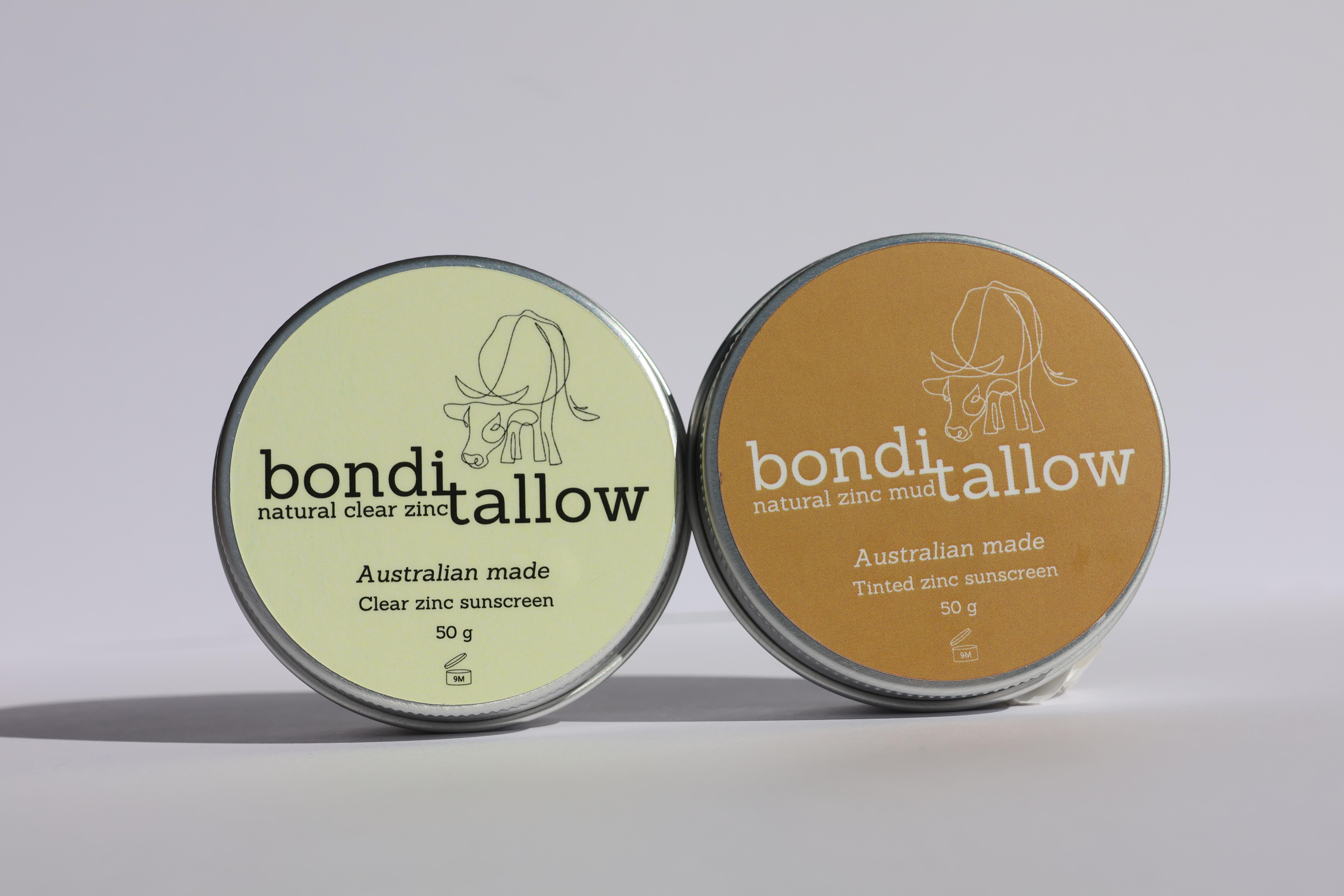
Not on the ingredient list alone. Some brands combine a mineral filter such as zinc oxide with a tallow base. Zinc oxide is a recognised sunscreen ingredient, but whether a product protects you depends on its concentration, its formulation, and testing of the finished product.
In Australia, a product that claims to protect against the sun is regulated as a therapeutic good. The TGA says to find the AUST number on the label first, and warns that without one a sunscreen might be unapproved or cosmetic and may not protect against sunburn or skin cancer. The TGA also recalls products that don't deliver the SPF on their label.
Cancer Council NSW makes a related point: cosmetics that contain sunscreen aren't considered therapeutic products and aren't regulated in Australia.

How Do You Choose a Sunscreen in Australia?
Read the label before you buy. Use this checklist, drawn from TGA and Cancer Council guidance:
| Check | What it tells you |
|---|---|
| AUST L or AUST R number | The product is on the Australian Register of Therapeutic Goods and can be legally supplied in Australia |
| SPF50 or SPF50+ | Cancer Council's recommended level of protection against UVB |
| Broad-spectrum | Protects against both UVA and UVB |
| Water-resistant | Stays on better during swimming or sweating, but still needs reapplying every two hours |
| Directions and expiry date | How much to use, how often to reapply, and when to replace it |
How Much and How Often Should You Apply Sunscreen?
Generously, and often. Cancer Council recommends applying sunscreen about 20 minutes before going outside and reapplying at least every two hours, whatever the water-resistance rating says. It also advises using sunscreen on days when the UV Index is forecast to be 3 or above. Cancer Council NSW notes that most people don't use enough. Sunscreen is one of five protections, alongside clothing, a hat, shade, and sunglasses.
Where Does Tallow Balm Fit in a Sun-Smart Routine?
As a moisturiser, not as protection. Sydney dermatologist Mei-Heng Tan describes tallow in those terms.
“natural emollient, meaning it helps to lock in moisture”
— Mei-Heng Tan, Sydney dermatologist, on tallow, in RNZ
Cancer Council NSW advises applying sunscreen first, on clean, dry skin, then moisturiser or makeup. So in the morning, apply your sunscreen, wait for it to settle, and add a thin layer of balm only where skin needs it. Bonditallow's Hydrate & Repair Face Balm and the fragrance-free Sensitive Skin Face Balm are moisturisers. So are the Deep Nourish Body Balm and the Lip Balm. None of them is a sunscreen, and none replaces one.
Moisture for after the sun
A tallow-based balm to cool and rehydrate skin after a day outdoors. Made in small batches in Australia.
Shop After Sun Balm Shop Hydrate & Repair Face Balm
New to tallow? Patch test on your inner forearm first.
Is After Sun Balm a Sunscreen?
No. After-sun products are for comfort. The TGA lists after-sun care products among the products it doesn't regulate as sunscreens. They can help skin feel cooler and less dry, but they don't protect against UV and aren't a treatment for sunburn. For blistering, severe pain, or burns over a large area, speak to a pharmacist or doctor. Our guide to after sun care covers the evening routine.
What Else Helps Protect Your Skin From the Sun?
Clothing, a hat, shade, and sunglasses all matter. Cancer Council's five steps are slip on sun-protective clothing, slop on sunscreen, slap on a broad-brimmed hat, seek shade, and slide on sunglasses. Cancer Council also says sunscreen isn't a suit of armour. It should be used alongside the other four.
Take extra care with babies. Cancer Council doesn't recommend sunscreen on babies under six months old, and advises keeping them out of direct sunlight when UV levels are 3 or above. For older babies and children, speak to your doctor or child health nurse.
Frequently Asked Questions
Can I use tallow instead of sunscreen?
No. Tallow has no reliable SPF, and Cleveland Clinic lists sunburn as a risk of relying on it. Use an approved sunscreen with the other four protections.
Does tallow have a natural SPF like some plant oils are said to?
We found no reliable, tested SPF rating for beef tallow. Claims that natural oils or fats have a useful SPF aren't a basis for sun protection. Rely on a sunscreen with an SPF rating on the label.
Does adding zinc oxide make a tallow balm SPF 30?
Not automatically. An SPF rating comes from testing the finished product, and in Australia a sunscreen should carry an AUST number. Check the label rather than assuming.
Is tallow sunscreen safe?
That depends on the specific product. Check for an AUST number, an SPF rating, and broad-spectrum protection, and patch test any new product. If a product has none of these, treat it as a moisturiser.
Should I put tallow balm on before or after sunscreen?
After, according to Cancer Council NSW. It advises applying sunscreen first, on clean, dry skin, then moisturiser or makeup.
Does a tallow lip balm protect my lips from the sun?
No. A tallow lip balm moisturises. If you want sun protection for your lips, use a product that has an SPF rating and an AUST number on the label.
Use the Right Product for Each Job
Tallow and sunscreen do different things. Choose an approved sunscreen for protection, check the label for an AUST number, an SPF rating, and broad-spectrum cover, and reapply as directed. Use a tallow balm for what it's good at: moisture, comfort, and softening dry skin. Patch test anything new, and keep the hat, sunglasses, and shade in your routine. Not sure which balm suits your skin? The quick skin quiz can help.
Find the right balm for your skin
Take the quick skin quiz, or browse the full Australian-made range of moisturisers.
Take the Skin Quiz Shop All Products
Patch test any new product before using it widely.
This article is general information about skincare and sun protection and isn't medical advice. Always follow the directions on your sunscreen's label. If you have a diagnosed skin condition, or your skin is burned, blistered, or very painful, speak to your doctor or pharmacist.