


Tallow vs Shea Butter: Which Heals Skin Best
Tallow vs Shea Butter: Which Heals Skin Best
By Bonditallow Editorial Team · Updated 2026-08-19
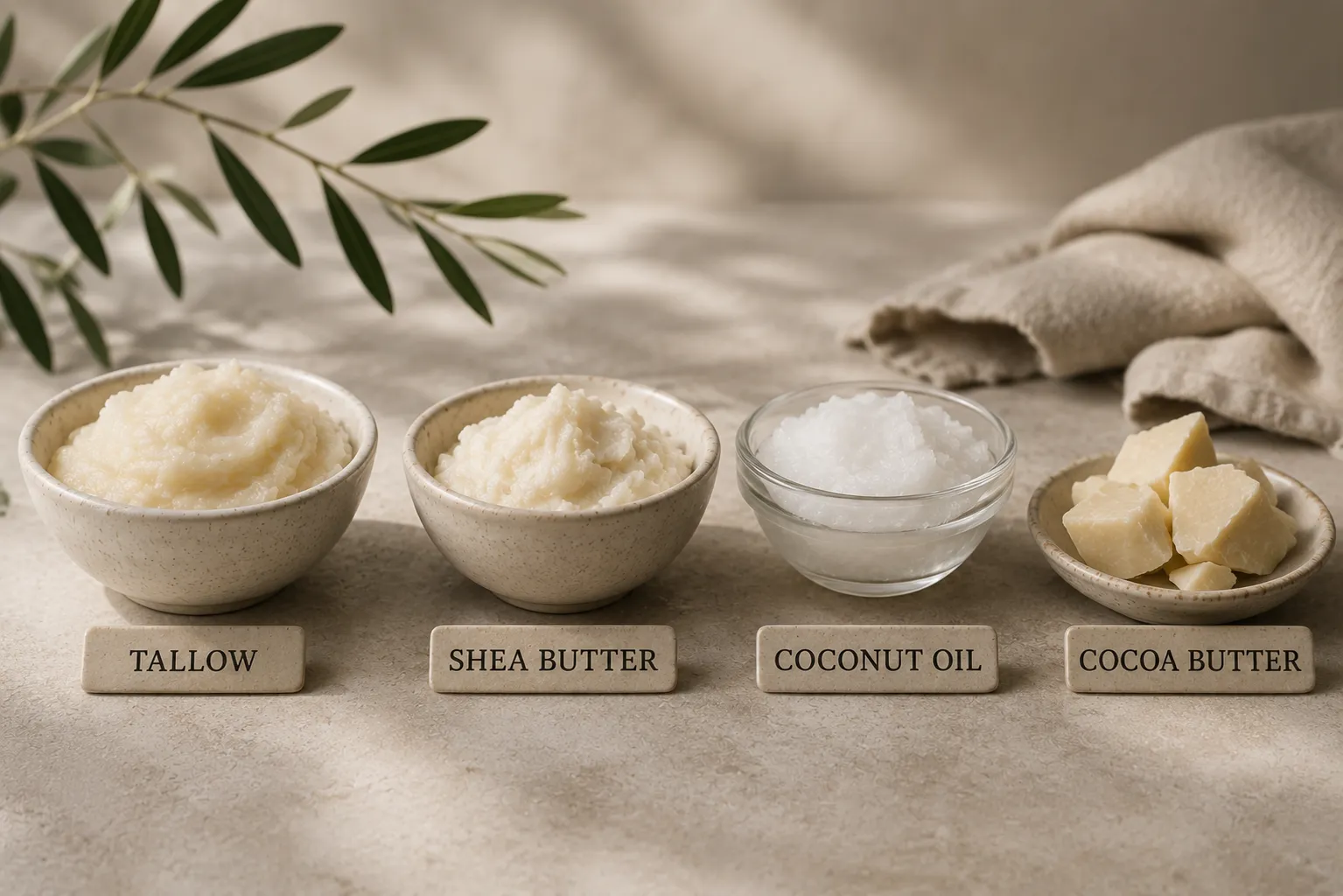
Tallow's fatty acid profile closely matches human sebum, making it the closest natural match for facial and body moisture among common natural fats. Shea butter offers richness and allantoin for body balms, while cocoa butter and coconut oil sit heavier and suit occasional use. Sensitive, dry, or compromised skin barriers may respond better to tallow-based formulas than tropical alternatives.
How Does Tallow Stack Up Against Shea Butter?
Skin-compatible fats set tallow apart from most plant butters. A tallow vs shea butter comparison starts with chemistry: tallow's fatty acid profile closely mirrors human sebum, the oil skin already produces. That similarity lets tallow absorb and integrate with the skin barrier rather than sitting on top of it.
Shea butter works differently. Rich in plant lipids, it moisturizes effectively but doesn't share the same molecular resemblance to skin's natural oils. For dry, stressed skin, that distinction matters. Tallow delivers nourishment using compounds the skin already recognizes, without relying on a long ingredient list to get results.
Which Is Better for Sensitive or Acne-Prone Skin?
Shea butter often earns the edge here. Its lighter plant-based composition tends to suit acne-prone, reactive, or vegan-minded skin types better than an animal-derived fat.
Tallow, by contrast, favors dry, normal, and mature skin looking for a simple fat closely aligned with the skin's own lipid structure.
|
Skin Type |
Better Fit |
|---|---|
|
Dry, normal, mature |
Tallow |
|
Acne-prone, sensitive |
Shea butter |
|
Vegan-minded |
Shea butter |
Neither fat fails outright — the right choice depends on skin type and personal values, not hype. Matching the fat to the skin's actual needs remains the deciding factor.
For dry, normal, or mature skin specifically, a dedicated tallow face balm is usually the simplest way to test the difference — a small amount goes a long way, and there's no need to layer multiple products to get the same result.
What About Coconut Oil and Cocoa Butter?
Coconut oil and cocoa butter each serve a purpose in natural skincare, but neither matches tallow's role as a deep facial moisturizer. Skin-barrier support remains the benchmark tropical butters are measured against, and tallow's rich fat structure sets that bar high.
Is coconut oil good for the face?
Coconut oil shines in a narrower lane. Its lauric acid content and natural lathering ability make it a strong choice for lip balms and soap making, not facial moisture. For those comparing tallow vs coconut as a daily face treatment, coconut oil's strengths lie elsewhere on the body, not in barrier repair.
That said, tallow holds its own even in coconut oil's home turf. A tallow lip balm offers the same skin-matching benefit in a smaller format — useful for chapped or peeling lips that plain coconut-based balms don't always fix.
Where does cocoa butter fit into the picture?
Cocoa butter usually appears alongside shea butter and plant-based oils as one of several alternative moisturizers people weigh against tallow. It's grouped, not singled out, in most comparisons.
Individuals sorting through tallow vs cocoa butter or tallow vs shea butter discussions will notice a pattern: plant-based butters get discussed as a category. Tallow stands apart for its closeness to skin's own oils.
Quick reference:
|
Ingredient |
Best Suited For |
|---|---|
|
Tallow |
Face and body moisture, barrier support |
|
Coconut oil |
Lip care, soap making |
|
Cocoa butter |
General body balms, blended formulas |
For dry, compromised, or reactive skin, tallow is often recommended for its nourishing properties.
Which Natural Fat Actually Fits Your Skin?
Dry, sensitive, and barrier-compromised skin responds best to fats that closely resemble its own natural oils. Animal-derived tallow ranks highest by that measure, a reputation earned over centuries thanks to its dense mix of fatty acids, vitamins, and antioxidants.
Comparing the options side by side makes the choice clearer:
|
Fat |
Best For |
Consideration |
|---|---|---|
|
Tallow |
Dry, reactive, barrier-compromised skin |
Closely matches skin's own lipids |
|
Shea butter |
Rich body balms |
Heavier texture, plant-based origin |
|
Coconut oil |
Light layering, hair care |
Can feel heavy on some skin types |
|
Cocoa butter |
Firm, occlusive balms |
Strong scent, slower to absorb |
Is tallow vs shea butter really different for dry skin?
Both moisturize well, but their structures differ. Tallow vs shea butter comes down to origin: tallow's animal-based fatty acid profile mirrors skin's own oils. Shea butter's plant-based richness works better layered into body balms than as a facial primary.
Does tallow vs coconut oil matter for sensitive skin?
Coconut oil earns its place in hair care and light layering. Yet tallow vs coconut comparisons consistently show tallow sitting closer to human sebum, a distinction that matters most for compromised barriers.
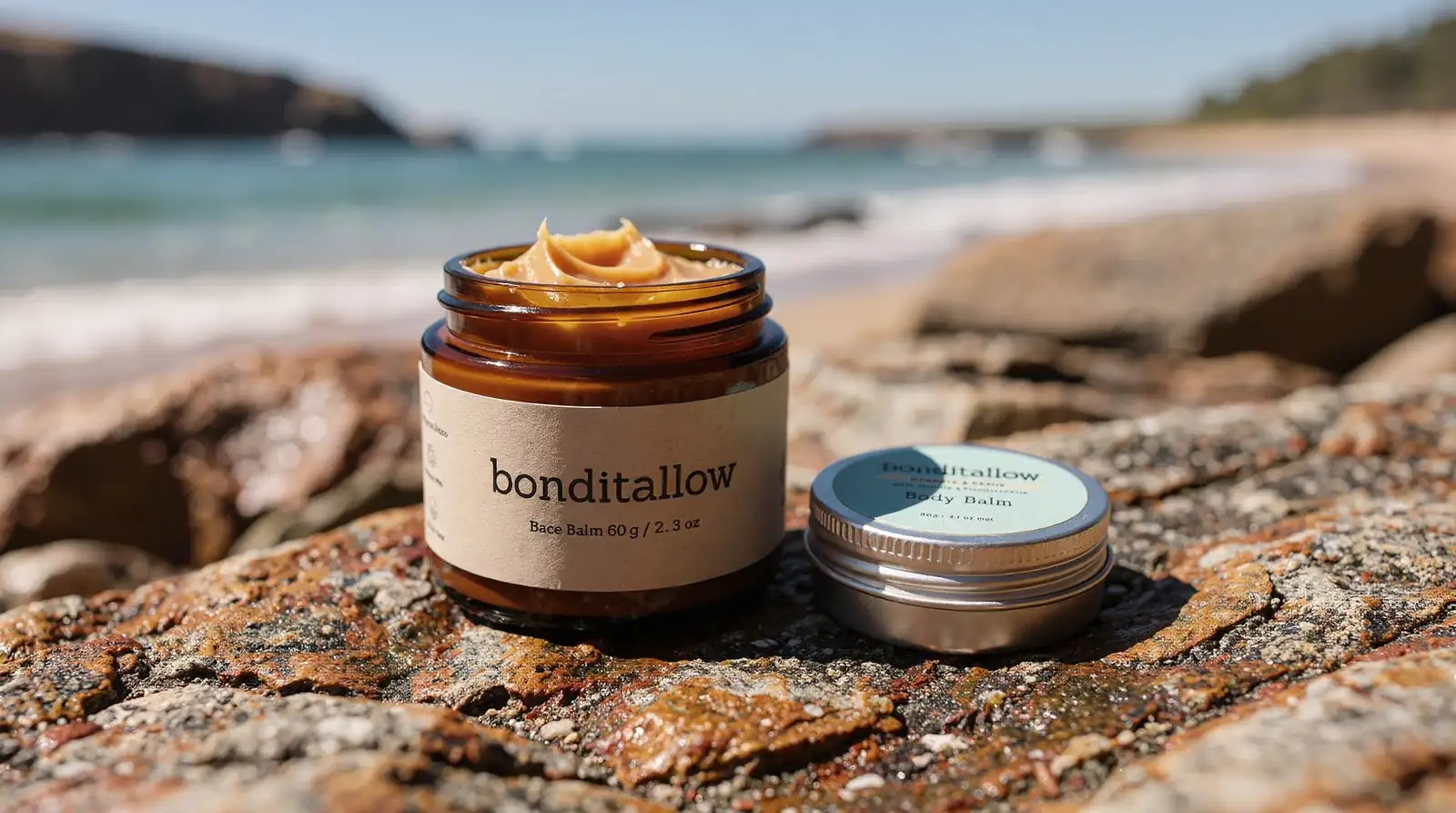
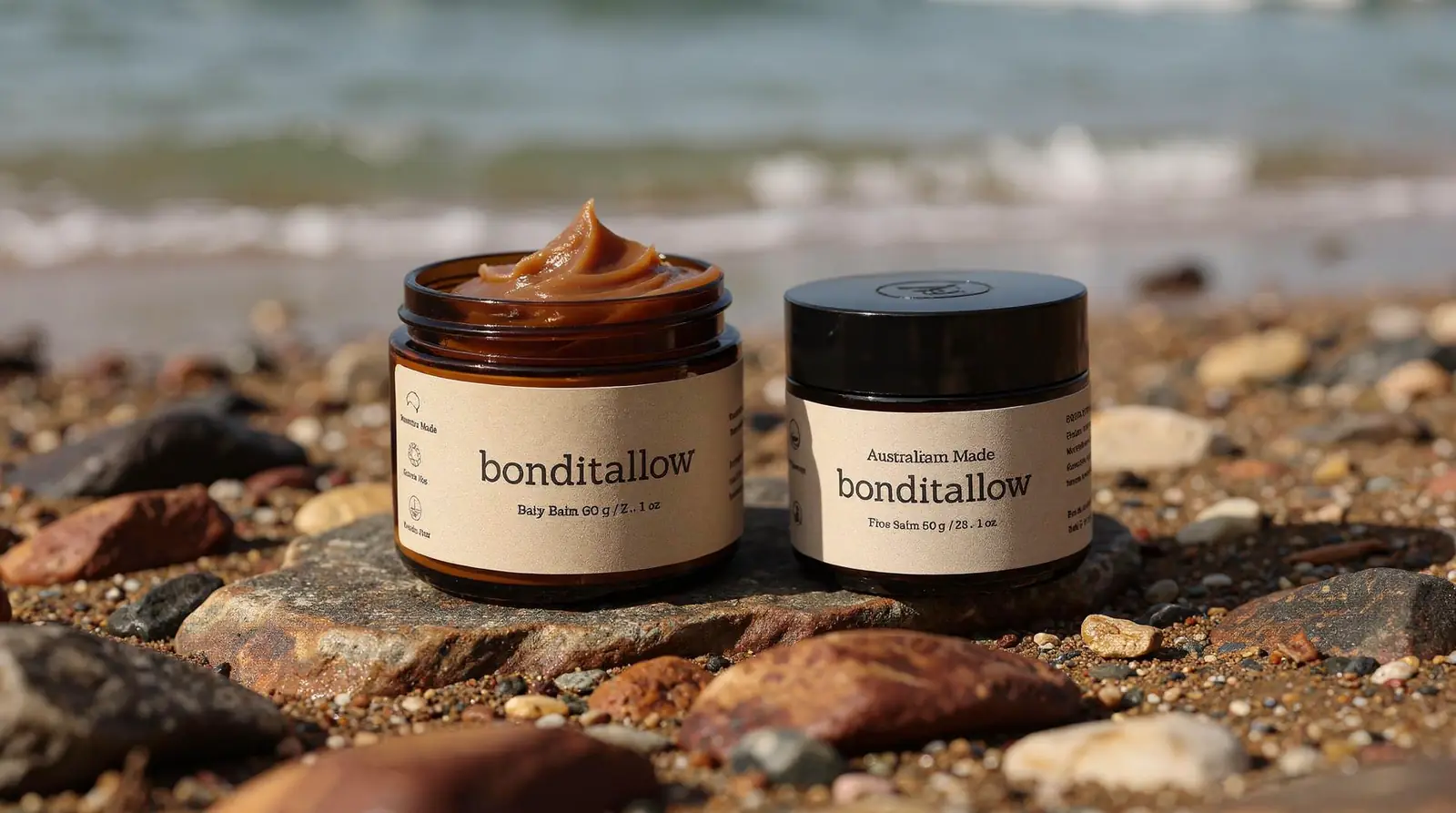
Bonditallow builds every formula around that compatibility principle, favoring tallow vs cocoa butter simplicity over heavy, occlusive blends. Products stay pared back, using fewer ingredients than skin actually needs, and each batch is made and owned in Australia.
What's Actually in Tallow That Makes It Work?
The fatty acid profile is the whole story. Rendered beef tallow is made up predominantly of oleic acid, stearic acid, and palmitic acid — the same three fatty acids that dominate human sebum. Shea butter, by contrast, leans heavily on stearic and oleic acid too, but carries a higher proportion of unsaponifiables (plant compounds like vitamin E precursors) that give it a thicker, more cushioning texture on the skin's surface rather than blending into it.
That difference in ratio is why the two fats feel different within minutes of application. Tallow tends to disappear into the skin fairly quickly once warmed between the fingers, while shea butter sits longer as a visible layer — useful for a night balm, less ideal under makeup or sunscreen during the day.
How Should You Actually Apply a Tallow Balm?
Application matters as much as the ingredient itself. A small amount — roughly a pea-sized scoop for the full face — goes further than most people expect, because tallow melts at close to body temperature. Warming it between clean fingertips before applying helps it spread evenly and absorb faster, rather than sitting on top of the skin in a thick layer.
-
Cleanse first: apply to slightly damp skin after washing, while pores are still open
-
Use less than you think: a little goes a long way given tallow's rich texture
-
Layer if needed: for very dry skin, a thin second layer at night works better than one thick application
-
Patch test first: as with any new skincare ingredient, especially for reactive or sensitive skin
The full range covers more than just face care. Alongside the face balm and lip balm, the tallow balm Australia shoppers keep coming back to handles drier patches on elbows, knees, and hands, and the same skin-compatible fat is behind Bonditallow's beef tallow sunscreen for daytime protection. It's the same principle applied across a full routine, not a single product.