


Grass Fed Tallow: Sustainable Skincare Sourcing
Grass Fed Tallow: Sustainable Skincare Sourcing
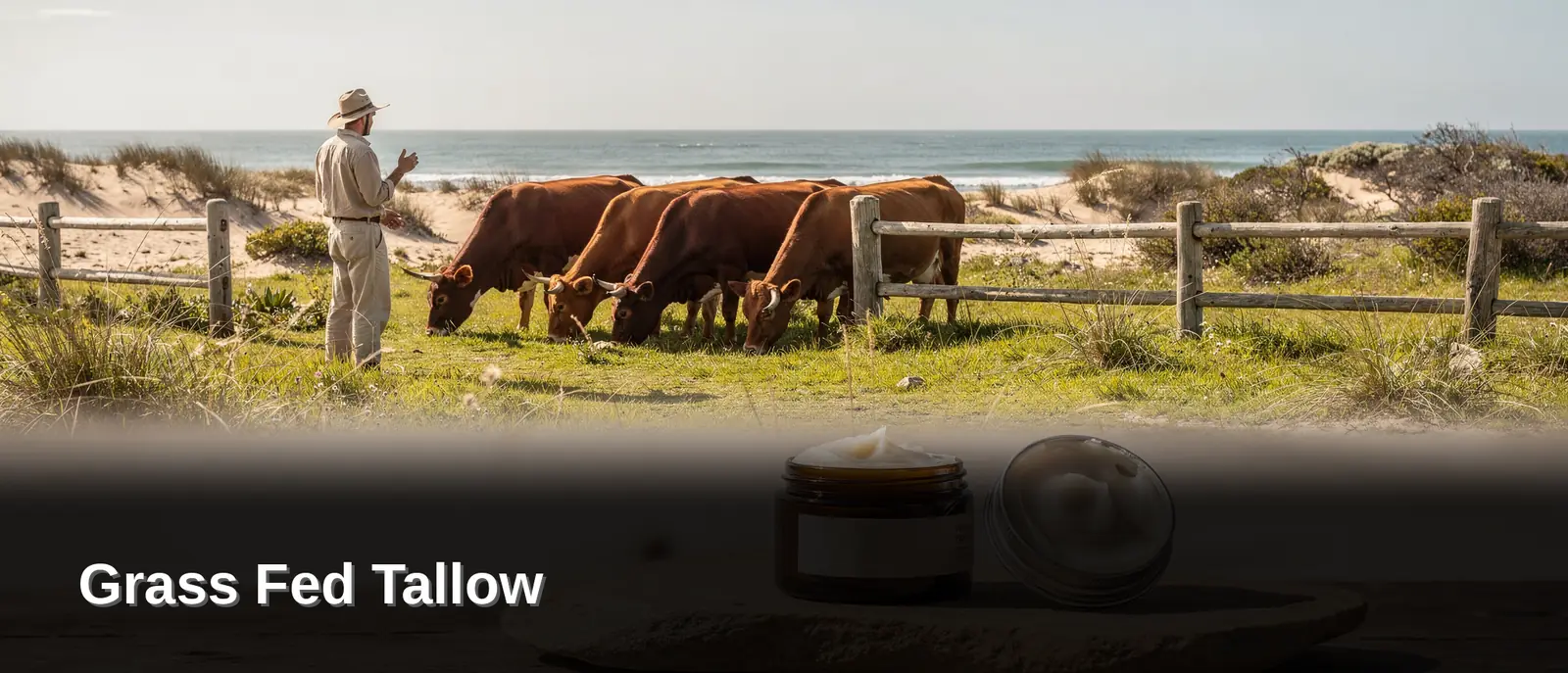
By Bonditallow Editorial Team · Updated 2026-09-21
Grass-fed tallow sourcing supports more sustainable skincare by repurposing a natural byproduct of the beef industry rather than creating demand for a new agricultural input. Its fatty-acid profile, rich in vitamins A, D, E, and K, mirrors skin's own oils. Bonditallow's Hydrate & Repair Face Balm is built around that compatibility, sourced from grass-fed Australian cattle.
What Makes Grass-Fed Tallow a More Sustainable Choice for Skincare?
Sourcing starts with how cattle are raised and how little of the animal goes to waste. Grass-fed tallow earns its reputation as a sustainable, skin-friendly ingredient because pasture-raised cattle produce fat with a nutrient profile that supports both skin health and a byproduct model rather than driving extra farming on its own.
The nutritional case is straightforward. Tallow carries vitamins A, D, E, and K — a combination that helps hydrate and support the skin barrier without a long ingredient list behind it.
Why Does Grass-Fed Matter Specifically?
Grass-fed cattle are generally raised under less intensive conditions than grain-finished herds, which ties the ingredient to pasture-based farming rather than industrial feedlot systems. Ethical tallow sourcing means the fat used in a formula comes from that same accountable supply chain, not an anonymous byproduct stream with no visibility into how the animal was raised.
Does This Kind of Sourcing Reduce Waste?
Yes. Tallow production repurposes a byproduct that would otherwise go unused, rather than being the reason an animal is raised in the first place. That repurposing model is a meaningful part of why many shoppers weighing tallow against synthetic or palm-oil-derived alternatives see waste-reduction as the deciding factor.
For skincare shoppers weighing formulas, these factors matter:
- Sourcing transparency — knowing the cattle were pasture-raised
- Nutrient density — vitamins A, D, E, K intact
- Waste reduction — byproduct repurposed, not discarded
- Local supply chain — shorter distance between farm and jar

How Does Sourcing Quality Affect What Ends Up in the Jar?
Sourcing quality shapes the finished product because tallow inherits characteristics from what the animal was fed and how it was raised. Cattle raised on pasture, without synthetic hormones or routine antibiotics, tend to produce a more consistent, cleaner starting fat than grain-fed or industrially processed alternatives.
Grass-fed tallow carries a fatty-acid profile that includes compounds like stearic acid, which supports the skin's barrier function and helps lock in moisture — one of the reasons this ingredient keeps coming up in conversations about simple, minimal-ingredient skincare.
Why Does Farm Quality Matter for Skincare Results?
Farm quality affects whether the finished fat performs well on skin. Suet rendered from well-managed farms tends to produce a cleaner, more stable base than fat sourced from lower-welfare operations with less oversight. Ethical tallow sourcing also supports the same low-waste, small-batch production model Bonditallow uses across its body balm and lip balm lines.
Does Ethically Sourced Tallow Suit Sensitive or Reactive Skin?
For many people, yes. The fatty-acid structure resembles oils skin already produces, so compatibility tends to come built in rather than engineered through a long list of synthetic additives. For shoppers wary of synthetic fillers, that overlap is part of why properly sourced tallow is often better tolerated than heavier, more processed alternatives — though as with any skincare ingredient, individual results vary and a patch test is always worth doing first.
Where Is Bonditallow's Tallow Sourced From?
Bonditallow's tallow comes from Australian farms, then moves through small-batch production before reaching customers. Manufacturing stays local, which is a core part of what defines every jar produced.
Tallow sourcing across Australia means shorter supply chains and less time between rendering and packaging — a real, practical benefit for a fat-based ingredient rather than just a marketing line. Grass-fed tallow carries skin-compatible fatty acids, and those compounds tend to hold up best when processing happens quickly rather than sitting in transit for weeks before reaching a shelf.
Why Does Sourcing Location Affect Skincare Quality?
Distance and storage time can degrade delicate fats over time. Short supply chains help preserve the moisture-rich profile that makes tallow useful for dry skin in the first place. Small batches also mean less inventory sitting idle in a warehouse, so product reaching customers reflects recent production rather than old stock.
Does Sourcing Actually Affect How a Product Performs on Skin?
Yes — sourcing shapes what actually ends up on your skin. Ethical tallow sourcing and thoughtful farm partnerships support the straightforward approach Bonditallow builds its formulas around, using Australian-made ingredients without unnecessary complexity.
Shoppers researching where Bonditallow's tallow is sourced from often ask because skin-barrier compatibility depends on fat quality in the first place. Fresh, well-sourced tallow shares structural similarities with skin's own oils, which is part of why sourcing practices directly affect how a product feels and performs.

Rounding Out the Range
The same sourcing standard applies across the full Bonditallow lineup — the fragrance-free Sensitive Skin Face Balm for reactive skin, and the Zinc Sunscreen for daytime coverage, both built on the same Australian grass-fed base.
Frequently Asked Questions
Is grass-fed tallow the same as organic tallow?
Not necessarily — "grass-fed" refers to what the cattle were fed, while "organic" is a separate, regulated certification covering a wider range of farming practices. A product can be grass-fed without carrying an organic certification, and vice versa, so it's worth checking a brand's specific claims rather than assuming the two terms mean the same thing.
Why not just use a plant-based alternative instead?
Plant oils have their own place in skincare, but they don't share tallow's close structural resemblance to human sebum, since plant and animal lipids are chemically different. For people specifically looking for that compatibility, grass-fed tallow remains a distinct option rather than a direct substitute for a plant-based butter or oil.
Does grass-fed tallow smell different from regular tallow?
Properly rendered tallow, grass-fed or otherwise, should be close to neutral in scent. Any strong smell usually points to the quality of rendering rather than the diet the cattle were raised on.
Conclusion
Choosing grass-fed tallow skincare is a way of supporting both your own skin and a more accountable, lower-waste supply chain behind it. Bonditallow's Australian-made approach shows that effective nourishment doesn't require a complicated formula — it requires understanding what skin actually needs and where the ingredients came from. By choosing tallow products built on transparent, grass-fed sourcing, you invest in a product that mirrors your skin's own oils while supporting a genuinely lower-waste model than most synthetic alternatives.